Stale at the Top: How Temporal Data Gaps Are Costing Executives Their Strategic Edge

Photo: MDGovpics, CC BY 2.0, via Wikimedia Commons
There is a quiet assumption embedded in most corporate decision-making processes: that the information presented in a boardroom reflects the current state of the business. In reality, it rarely does. By the time market data is collected, cleaned, aggregated, and formatted into a presentation-ready report, the conditions it describes have frequently shifted. Executives are, in effect, navigating forward while reading a rearview mirror.
This is not a technology problem, strictly speaking. Many of the organizations most affected by intelligence lag have invested heavily in enterprise software, data warehouses, and business intelligence platforms. The issue is structural — rooted in how data moves through an organization, who interprets it, and at what cadence it reaches the people empowered to act on it.
The Anatomy of an Intelligence Lag
Understanding why data arrives late requires mapping the journey it takes before it lands on an executive's desk. In a typical mid-to-large US enterprise, operational data originates across dozens of systems: point-of-sale platforms, supply chain management tools, CRM software, financial ledgers, and third-party market research feeds. Each of these systems operates on its own update schedule. Some refresh in real time; others batch-process nightly, weekly, or monthly.
Once collected, data typically passes through an analytics or business intelligence team, where it is reconciled, validated, and translated into digestible formats. This process introduces additional delay. A quarterly business review, for instance, may draw on data that was finalized two weeks before the meeting — meaning the strategic conversation taking place today is grounded in conditions that existed a month or more ago.
For industries where competitive dynamics shift rapidly — consumer retail, financial services, logistics, digital media — that gap can represent the difference between a well-timed strategic move and a costly miscalculation.
When Lag Becomes Loss: Patterns Across Industries
The consequences of stale intelligence are rarely dramatic in isolation. They accumulate quietly, manifesting as missed opportunities, misallocated resources, and strategic pivots that arrive a half-step too late.
Consider the retail sector, where inventory decisions made on the basis of last quarter's sell-through data can result in overstocking categories that have already peaked in consumer demand. Several major US retailers experienced precisely this dynamic in the post-pandemic period, when consumer spending patterns shifted faster than traditional reporting cycles could capture. Executives approved purchasing commitments based on trend lines that were already reversing by the time the reports were printed.
In financial services, credit risk models that rely on quarterly bureau data can miss emerging delinquency signals that appear first in real-time payment behavior. Institutions that built early-warning systems drawing on more current data streams were better positioned to tighten underwriting standards ahead of broader market deterioration — a competitive and risk-management advantage that compounded over time.
The manufacturing sector presents a different variation of the same problem. When production planning is driven by demand forecasts derived from historical sales data, organizations are perpetually calibrating to a past that no longer exists. Supply chain disruptions — as the last several years have demonstrated with unusual clarity — can render months-old demand signals almost entirely irrelevant.
The Dashboard Illusion
One of the more counterintuitive findings to emerge from conversations with enterprise data leaders is that the proliferation of dashboards has not, in many cases, reduced intelligence lag. It has sometimes obscured it.
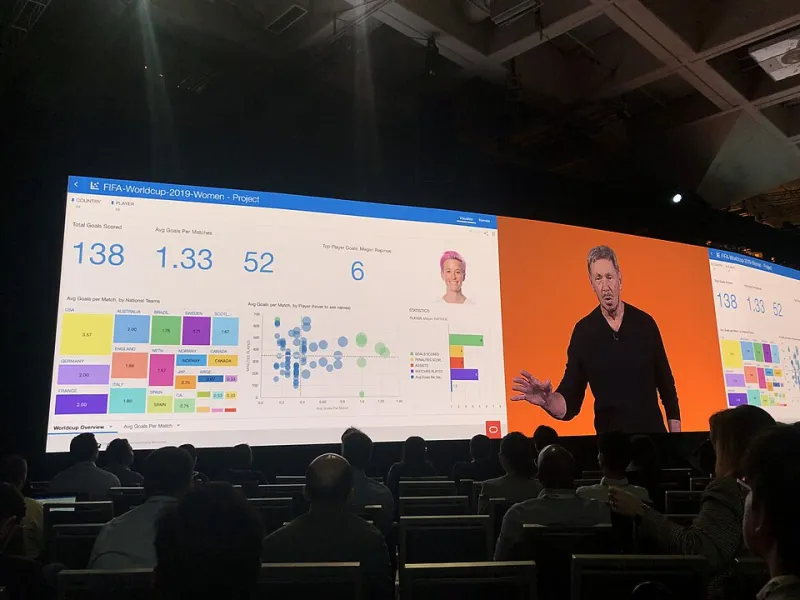
Modern business intelligence platforms create a compelling visual impression of real-time awareness. Charts update, metrics refresh, and trend lines animate — all of which can generate a sense that decision-makers are operating with current information. But the underlying data feeding those dashboards may still be subject to the same batch-processing delays and manual reconciliation steps that characterized reporting a decade ago. The interface has modernized; the pipeline has not.
This distinction matters because it affects how urgently organizations pursue genuine data infrastructure improvements. When executives believe they already have real-time visibility, the incentive to invest in closing actual latency gaps diminishes. The dashboard becomes a confidence mechanism rather than an intelligence tool.
Building a Temporal Intelligence Framework
Closing the gap between data generation and executive decision-making requires deliberate architectural and cultural choices. A few principles have emerged as particularly effective across industries.
Classify decisions by data freshness requirements. Not every strategic choice demands real-time input. Annual capital allocation decisions can tolerate longer data horizons than, say, promotional pricing adjustments or inventory rebalancing. Organizations that explicitly map their decision types to appropriate data latency thresholds are better equipped to invest in real-time infrastructure where it actually matters — and avoid over-engineering where it does not.
Instrument the pipeline, not just the output. Most organizations measure the accuracy of their data; fewer measure its age at the point of consumption. Building metadata practices that tag data with its origination timestamp — and surfacing that timestamp in executive reporting — creates accountability for recency, not just correctness.
Shorten the interpretation cycle. Technology can reduce collection latency, but organizational culture determines how quickly insights are acted upon. Companies that have reduced their strategic responsiveness to data most effectively have typically restructured their analytics function to operate closer to the business units it serves, reducing the handoff time between insight generation and decision input.
Treat lagging indicators as context, not signal. Historical data remains valuable — it establishes baselines, reveals seasonality, and contextualizes current performance. The error is treating it as the primary signal for forward-looking decisions. Organizations that explicitly distinguish between lagging indicators (for context) and leading indicators (for action) make sharper strategic calls with the same underlying data.
The Strategic Cost of Comfortable Reporting
There is an organizational psychology dimension to this problem that deserves acknowledgment. Reporting cycles exist, in part, because they are comfortable. Monthly business reviews create predictability. Quarterly earnings narratives provide a structured rhythm. These cadences serve legitimate coordination functions — but they also normalize a pace of intelligence consumption that may be wholly mismatched with the pace at which competitive conditions actually evolve.
The organizations most vulnerable to intelligence lag are often those whose internal cultures have conflated reporting frequency with strategic awareness. When the monthly review is treated as the primary occasion for executive-level data engagement, the implicit message is that nothing between those meetings requires data-informed attention. In most industries today, that assumption carries significant strategic risk.
The companies that have most effectively addressed temporal data gaps share a common orientation: they treat data freshness as a competitive asset, not an IT consideration. That reframing — from infrastructure problem to strategic imperative — is where meaningful change tends to begin.
For US business leaders navigating increasingly compressed competitive cycles, the question is no longer whether their organizations have data. It is whether the data they have is current enough to be trusted when it matters most.