Visibility Without Clarity: How America's Largest Corporations Are Misreading Their Own Supply Chains

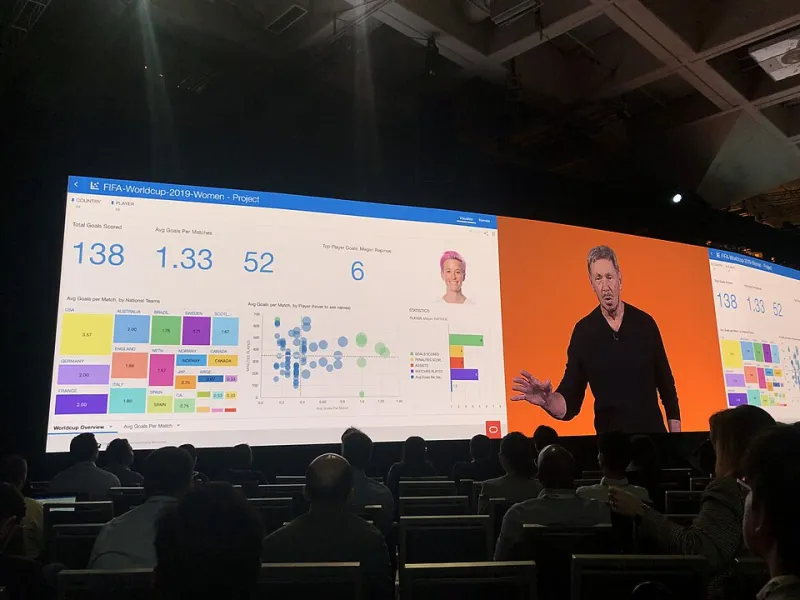
Photo: ATLAOne, CC0, via Wikimedia Commons
There is a common assumption in corporate boardrooms across the United States: that investment in data infrastructure translates directly into operational awareness. For supply chain management, this assumption is proving dangerously incomplete. The largest companies in America — organizations with dedicated logistics teams, enterprise resource planning systems, and real-time tracking dashboards — are still routinely blindsided by disruptions that, in retrospect, carried visible warning signs for weeks or months before impact.
The problem is not a shortage of data. It is a shortage of intelligence.
The Difference Between Monitoring and Understanding
Modern supply chain monitoring tools generate enormous volumes of information. Shipment locations, port congestion indices, weather alerts, supplier financial filings, geopolitical risk scores — the inputs are, in theory, comprehensive. Yet when the Francis Scott Key Bridge collapsed in Baltimore in March 2024, companies with significant East Coast logistics exposure reported that their internal systems failed to rapidly model the downstream consequences for their specific supplier relationships. The event was visible. The cascading impact on individual procurement networks was not.
This distinction — between an event being observable and its strategic consequences being understood — defines what analysts increasingly refer to as the intelligence gap. Data arrives. Meaning does not automatically follow.
For Fortune 500 companies operating with extended, multi-tier supplier networks, this gap is structural. Most enterprise systems are designed to track Tier 1 suppliers with reasonable fidelity. Visibility into Tier 2 and Tier 3 relationships — the subcomponent manufacturers, the raw material processors, the regional logistics intermediaries — degrades sharply. A 2023 survey by a major supply chain consultancy found that fewer than 15 percent of large US manufacturers had meaningful visibility beyond their direct suppliers. The remaining 85 percent were, in effect, operating with an incomplete map of their own operations.
Why Cascading Failures Remain Predictably Unpredictable
Cascading supply chain failures follow a recognizable pattern: a localized disruption triggers a concentration risk that was previously unmapped, which then surfaces as a simultaneous shortage across multiple product lines or business units. The disruption appears sudden. The underlying vulnerability was latent.
Consider the semiconductor shortages that crippled US automotive production between 2021 and 2023. The immediate cause — pandemic-related factory closures in Southeast Asia — was an acute event. But the deeper cause was that American automakers had allowed their supplier networks to consolidate around a small number of chip fabricators without building intelligence systems capable of flagging that concentration as a strategic liability. The data existed in procurement records, contract databases, and industry trade publications. The synthesis required to convert that data into a risk warning did not exist in a form that reached decision-makers.
This is the operational reality that separates data visibility from genuine supply chain intelligence: the capacity to synthesize inputs from disparate sources, map them against a company's specific network topology, and surface probabilistic risk assessments before disruptions materialize rather than after.
The Architectural Problem With Current Enterprise Systems
Most enterprise resource planning platforms were designed with transaction efficiency as their primary objective. They excel at recording what has happened — purchase orders issued, invoices cleared, inventory levels updated. They are considerably less capable of modeling what is likely to happen based on external signals that do not yet appear in internal transaction records.
The result is a systematic lag. By the time a supply chain disruption registers clearly enough in internal data to trigger an alert, the window for proactive response has frequently closed. Companies are left managing consequences rather than preventing them.
Addressing this architectural limitation requires integrating external intelligence feeds — commodity price trends, supplier financial health indicators, regional labor market data, climate and infrastructure risk assessments — with internal operational data in a manner that produces forward-looking analysis rather than historical reporting. This is technically achievable. It is not, however, the default configuration of most enterprise systems currently deployed across corporate America.
Building Intelligence Systems That Anticipate Rather Than React
Organizations that have made meaningful progress on this challenge share several operational characteristics worth examining.
First, they treat supplier network mapping as a continuous intelligence function rather than a periodic procurement exercise. Rather than auditing supplier relationships annually, they maintain living maps of their supply networks that are updated as new information becomes available — including public filings, news signals, and third-party risk assessments.
Second, they have invested in cross-functional data integration that connects procurement, logistics, finance, and external risk monitoring into a unified analytical environment. Siloed data systems are among the most persistent contributors to the intelligence gap; disruptions that would be visible to a unified analytical layer remain hidden when relevant data points sit in separate departmental systems that do not communicate.
Third, they have established defined thresholds for escalation — specific signal combinations that automatically surface to executive attention rather than remaining buried in operational dashboards that no one with strategic authority reviews regularly.
None of these practices require technology that does not already exist. They require organizational commitment to treating supply chain intelligence as a strategic function rather than an operational one.
The Competitive Cost of Continued Inaction
For US companies competing in industries with tight margins and global supply networks — consumer electronics, pharmaceuticals, automotive, industrial manufacturing — the cost of the intelligence gap is not abstract. It manifests in expedited freight charges when planned shipments fail, in production halts when substitute components cannot be rapidly sourced, and in customer attrition when delivery commitments cannot be met.
Less quantifiable but equally significant is the strategic cost: the inability to capitalize on disruptions that affect competitors. Companies with superior supply chain intelligence do not merely survive disruptions more effectively — they are positioned to accelerate when competitors are paralyzed, securing supplier capacity, locking in favorable contract terms, and capturing market share during periods of industry-wide instability.
The Fortune 500 companies most exposed to this competitive dynamic are those that have invested heavily in data infrastructure while underinvesting in the analytical capabilities required to convert that infrastructure into strategic advantage. Dashboards without analysts. Data without frameworks. Visibility without clarity.
From Data Collection to Intelligence Production
The path forward for US corporations is not primarily a technology procurement challenge. The tools required to build genuine supply chain intelligence are largely available. The challenge is organizational: developing the internal capabilities, cross-functional processes, and executive sponsorship required to transform raw operational data into the kind of forward-looking analysis that actually influences strategic decisions.
For companies willing to make that investment, the competitive return is substantial. Supply chain resilience, properly understood, is not merely a risk management function — it is a source of durable competitive advantage in an operating environment where disruption has become a permanent condition rather than an exception.
The intelligence gap is real. So is the opportunity for organizations prepared to close it.