When Velocity Becomes Vulnerability: The Hidden Strategic Price of Outrunning Your Own Intelligence

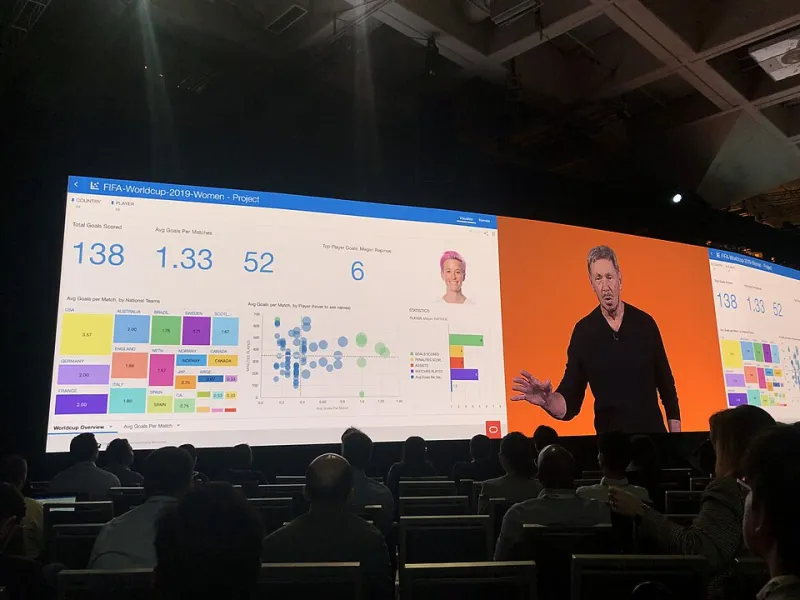
Photo: executive making fast business decision with data analytics dashboard, via as1.ftcdn.net
There is a seductive logic to speed. In an era defined by market disruption, compressed product cycles, and the constant threat of being outmaneuvered by a leaner competitor, the instinct to move fast feels not just reasonable but necessary. Boardrooms across the United States have increasingly rewarded decisiveness, framing it as a proxy for leadership strength. Yet a growing body of evidence — drawn from corporate post-mortems, strategic reversals, and competitive displacement events — points to a troubling pattern: the faster companies move without adequate data intelligence, the more expensive their mistakes become.
This is not an argument against speed. It is an argument for precision.
The Illusion of Momentum
Speed and momentum are not synonymous, though they are frequently conflated in executive decision-making. Momentum implies direction with force — movement toward a defined, validated objective. Speed, in isolation, is simply rate of motion. A company that launches a product line in six weeks based on anecdotal market feedback is moving fast. Whether it is moving forward is an entirely different question.
Consider the case of several mid-sized US retail chains that pivoted aggressively toward experiential in-store formats between 2018 and 2020. Responding to surface-level commentary about the "death of e-commerce fatigue" and competitive pressure from peers making similar moves, these organizations committed significant capital to physical renovations without conducting granular analysis of their specific customer demographics, regional foot traffic trends, or the actual behavioral drivers behind the broader experiential retail narrative. When the pandemic accelerated digital adoption and simultaneously disrupted in-store traffic patterns, these companies found themselves over-invested in a strategy built on borrowed insight rather than proprietary intelligence. The cost was not just financial — it was positional. Recovery required years, not quarters.
Contrast this with companies that maintained disciplined analytical processes even under competitive pressure. Retailers that had invested in robust customer data platforms and continued to interrogate their own transaction data, loyalty program signals, and localized demand patterns were able to make faster and better decisions — not because they moved slowly, but because their intelligence infrastructure was already in place when speed was required.
The Executive Pressure Trap
Understanding why rigorous data analysis gets abandoned under pressure requires examining the incentive structures that govern executive behavior. Quarterly earnings expectations, activist investor timelines, and the cultural glorification of the "decisive leader" all create environments in which the appearance of action is rewarded more immediately than the quality of outcomes.
A 2023 survey of senior business leaders conducted by a prominent US management consultancy found that more than 60 percent of respondents acknowledged making at least one significant strategic decision in the prior 18 months with data they privately considered insufficient. The primary reasons cited were time pressure, stakeholder expectations, and a belief that waiting for better data would cost more than acting on imperfect information.
This calculus is understandable. It is also frequently wrong.
The cost of a flawed strategic decision is rarely confined to the immediate operational loss. It compounds through misallocated resources, organizational misalignment, damaged customer relationships, and — most critically — the competitive ground ceded to rivals who maintained their analytical discipline. By the time the error is fully visible in the financials, reversing course has become significantly more expensive than the original investment in better intelligence would have been.
Data-Driven Competitors Are Playing a Different Game
While some organizations are outrunning their own intelligence, others are using data infrastructure as a deliberate competitive weapon. The distinction is not merely technical — it is strategic and cultural.
Companies that have embedded data intelligence into their core decision-making processes operate with a fundamentally different risk profile. They are not slower; they have simply pre-invested in the analytical capacity that allows them to move quickly and confidently when the moment demands it. Their intelligence systems are not reactive tools consulted after a strategic direction has already been chosen. They are proactive inputs that shape the range of options executives consider in the first place.
In the logistics and supply chain sector, for example, operators who had built predictive modeling capabilities before the supply chain disruptions of 2021 and 2022 were able to make faster procurement and routing decisions during the crisis than competitors who were gathering data in real time under duress. The intelligence advantage translated directly into service reliability, customer retention, and margin preservation — outcomes that remained visible in their competitive positioning long after conditions normalized.
The lesson is not that these companies were more cautious. It is that they had already done the analytical work that their competitors were forced to skip.
A Framework for Balancing Velocity and Rigor
The practical challenge for most organizations is not a philosophical one — most executives understand that better data leads to better decisions. The challenge is structural: how do you maintain analytical rigor when the competitive environment genuinely demands rapid response?
Several principles have emerged from organizations that have navigated this tension successfully.
Establish decision tiers with corresponding data thresholds. Not every decision requires the same depth of analysis. Creating explicit internal standards that define what level of data validation is required for decisions of different scale and reversibility allows organizations to move quickly on lower-stakes choices while protecting the analytical process for consequential ones.
Invest in intelligence infrastructure before you need it. The organizations that make the best fast decisions are those that have already built the data pipelines, analytical models, and institutional knowledge needed to generate insight rapidly. Intelligence capacity built under pressure is intelligence capacity built poorly.
Separate urgency from importance. Many decisions that feel urgent are not, in fact, irreversible. Creating deliberate pause points in the decision process — even brief ones — to ask whether the timeline is externally imposed or internally assumed can prevent the conflation of competitive anxiety with genuine strategic necessity.
Treat incomplete data as a known risk, not a solved problem. When decisions must be made on imperfect information, the appropriate response is to name the uncertainty explicitly, build contingency provisions into the plan, and establish clear triggers for reassessment. Acting as though insufficient data is sufficient data is where the real strategic danger lies.
The Intelligence Dividend
Speed will remain a competitive imperative. Markets will not slow down, and the organizations that can execute with both velocity and precision will continue to hold structural advantages over those that can only manage one or the other.
But the companies best positioned to sustain competitive advantage over the next decade are not those that simply move fastest. They are those that have invested seriously in the data intelligence capabilities that make fast decisions good decisions — organizations that understand the difference between the confidence that comes from genuine insight and the confidence that comes from simply not having waited long enough to find out they were wrong.
In a business environment that rewards momentum, the most strategically sophisticated move a leadership team can make is ensuring that their momentum is pointed in the right direction before they commit to the acceleration.